
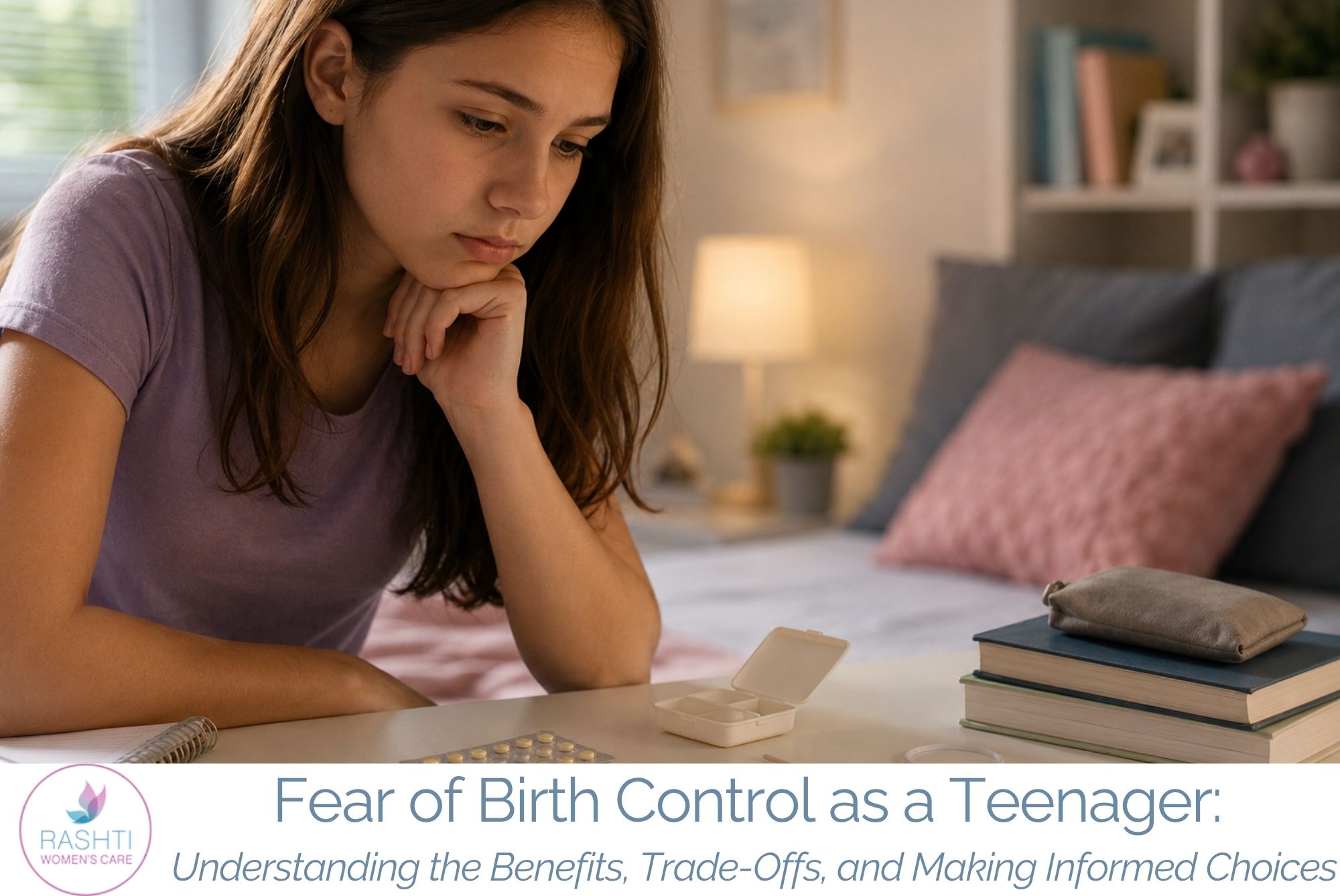
 For many teenagers, the idea of starting birth control can feel overwhelming. Questions about side effects, long-term health impacts, future fertility, and social stigma often create anxiety and uncertainty. These concerns are completely understandable, especially when teens are exposed to conflicting information online, through friends, or on social media.
At Rashti Women’s Care, we believe that education and open communication are essential for helping young women make informed decisions about their reproductive health. Understanding both the benefits and trade-offs of birth control can help teenagers feel empowered, confident, and supported in choosing what is best for their individual needs.
Why Are Teenagers Often Afraid of Birth Control?
Fear surrounding birth control is common among adolescents. Many teens worry about:
- Potential weight gain
- Mood changes or emotional effects
- Concerns about future fertility
- Long-term health consequences
- Family or cultural beliefs
- Fear of judgment from peers or adults
- Uncertainty about which method is right for them
While these concerns deserve attention, it’s important to separate myths from facts. Modern contraceptive options have been extensively studied and are considered safe for most healthy teens when prescribed and monitored by qualified healthcare providers.
Understanding Birth Control Options
Birth control comes in many forms, including:
Birth Control Pills
Taken daily, oral contraceptives help prevent pregnancy by regulating hormones and preventing ovulation.
Hormonal IUDs
A small device placed inside the uterus that provides long-term pregnancy prevention for several years.
Copper IUDs
A non-hormonal option that offers long-lasting contraception.
Birth Control Implant
A small rod inserted under the skin of the arm that releases hormones to prevent pregnancy.
Birth Control Shot
An injection given every few months to prevent pregnancy.
Birth Control Patch
A skin patch that delivers hormones through the skin.
Vaginal Ring
A flexible ring placed inside the vagina that releases hormones.
Each option has unique advantages and considerations, making personalized medical guidance especially important.
Benefits of Birth Control for Teenagers
Birth control offers more than pregnancy prevention. Many teenagers experience additional health benefits.
Pregnancy Prevention
One of the primary reasons for using birth control is reducing the risk of unintended pregnancy. This allows teens to focus on education, personal goals, and future planning.
More Predictable Menstrual Cycles
Hormonal birth control can help regulate periods, making cycles more consistent and easier to predict.
Reduced Menstrual Pain
Many teenagers experience painful cramps. Certain forms of birth control can significantly decrease discomfort associated with menstruation.
Lighter Periods
Hormonal contraceptives often reduce menstrual bleeding, helping teens who struggle with heavy periods.
Improved Acne
Some birth control pills can improve hormonal acne, resulting in clearer skin and increased self-confidence.
Treatment for Certain Medical Conditions
Birth control may be recommended for managing:
- Polycystic Ovary Syndrome (PCOS)
- Endometriosis
- Hormonal imbalances
- Irregular menstrual cycles
- Heavy menstrual bleeding
Understanding the Trade-Offs
While birth control provides many benefits, every medical decision comes with potential trade-offs.
Temporary Side Effects
Some teens may experience:
- Mild nausea
- Breast tenderness
- Spotting between periods
- Headaches
- Mood fluctuations
These symptoms often improve after the body adjusts to the medication.
Finding the Right Method May Take Time
Not every birth control option works equally well for every individual. Sometimes adjustments are necessary to find the best fit.
Daily Responsibility
Certain methods, such as birth control pills, require consistent daily use for maximum effectiveness.
Potential Hormonal Effects
Some individuals may notice changes in mood, appetite, or energy levels. Open communication with a healthcare provider is important if these occur.
No Protection Against Sexually Transmitted Infections (STIs)
Most birth control methods prevent pregnancy but do not protect against sexually transmitted infections. Condoms remain an important part of sexual health protection.
Common Myths About Teen Birth Control
Myth: Birth Control Causes Infertility
Fact: Most forms of birth control do not affect long-term fertility. Fertility typically returns after discontinuing use.
Myth: Teens Are Too Young for Birth Control
Fact: Birth control can be a safe and appropriate healthcare option for teenagers under medical supervision.
Myth: Birth Control Always Causes Weight Gain
Fact: Most studies show minimal or no significant weight gain for many birth control users.
Myth: Birth Control Is Only for Sexually Active Teens
Fact: Many teenagers use birth control to manage menstrual symptoms, hormonal conditions, acne, and other medical concerns.
Talking to a Healthcare Provider
A trusted healthcare provider can help teenagers:
- Understand available options
- Discuss health history
- Evaluate potential risks and benefits
- Address fears and misconceptions
- Develop a personalized treatment plan
No two patients are exactly alike, which is why individualized care is so important.
Building Confidence Through Education
Fear often comes from uncertainty. Learning about reproductive health and having honest conversations with qualified medical professionals can help teens make informed decisions without unnecessary anxiety.
Whether a teenager ultimately chooses birth control or not, understanding the facts empowers them to take an active role in their healthcare journey.
Frequently Asked Questions (Q&A)
Is birth control safe for teenagers?
Yes. Most birth control methods are considered safe for healthy teenagers when prescribed and monitored by a healthcare professional.
Will birth control affect my ability to have children later?
No. Most forms of birth control do not cause permanent infertility, and fertility generally returns after stopping use.
What if I experience side effects?
Many side effects are temporary and improve within a few months. If symptoms persist, your provider can help adjust your treatment plan.
Do I need a pelvic exam before getting birth control?
Not always. Many teens can discuss birth control options and receive prescriptions without a pelvic exam, depending on their circumstances.
Can birth control help with painful periods?
Yes. Many hormonal birth control methods reduce menstrual cramps and discomfort.
Can birth control improve acne?
Certain birth control pills are commonly prescribed to help manage hormonal acne.
Which birth control option is best for teenagers?
There is no one-size-fits-all answer. The best option depends on medical history, lifestyle, preferences, and health goals.
Does birth control protect against sexually transmitted infections?
No. Most birth control methods do not protect against STIs. Condoms are recommended for STI prevention.
What if I’m nervous about talking to a doctor?
Feeling nervous is completely normal. Healthcare providers are trained to answer questions respectfully and confidentially.
Can birth control regulate irregular periods?
Yes. Hormonal birth control is frequently used to help regulate menstrual cycles and improve predictability.
Contact Rashti Women’s Care
If you have questions about birth control, adolescent gynecology, menstrual health, or women’s healthcare services, the team at Rashti Women’s Care is here to help.
Rashti Women’s Care
2410 Fletcher Ave Suite #301
Santa Barbara, CA 93105
Phone: (805) 682-7109
Website: https://rashtiwomenscare.com
Request An Appointment:
https://rashtiwomenscare.com/appointments/