
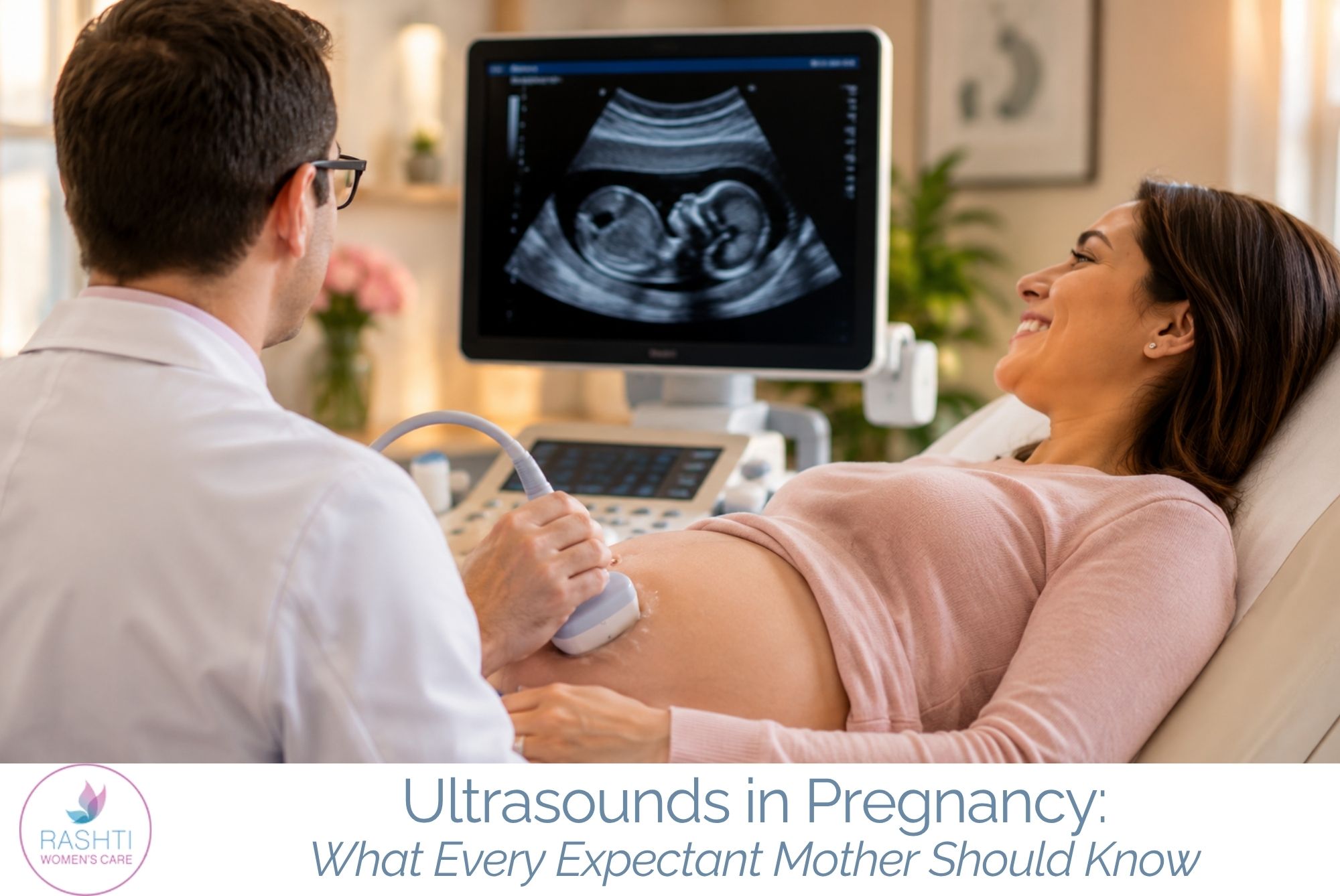
 Pregnancy is an exciting journey filled with important milestones, and one of the most valuable tools used throughout pregnancy is ultrasound imaging. Ultrasounds provide critical information about your baby’s growth, development, and overall well-being while helping your healthcare provider monitor your health throughout each stage of pregnancy.
At Rashti Women’s Care, we understand that pregnancy can bring many questions and emotions. Our experienced team is dedicated to providing compassionate, personalized prenatal care, including state-of-the-art ultrasound services to support healthy pregnancies and peace of mind for expectant mothers.
What Is a Pregnancy Ultrasound?
A pregnancy ultrasound is a safe, non-invasive imaging test that uses high-frequency sound waves to create images of your baby and reproductive organs. Unlike X-rays, ultrasounds do not use radiation, making them a safe and effective diagnostic tool during pregnancy.
Ultrasounds allow healthcare providers to:
- Confirm pregnancy
- Determine gestational age and due date
- Monitor fetal growth and development
- Assess the baby’s position
- Evaluate the placenta and amniotic fluid levels
- Detect potential complications
- Monitor multiple pregnancies (twins, triplets, etc.)
Why Are Ultrasounds Important During Pregnancy?
Ultrasounds play a vital role in prenatal care by providing valuable information that helps guide medical decisions and ensure the health of both mother and baby.
Confirming Pregnancy and Dating
Early ultrasounds can confirm a viable pregnancy and accurately determine how far along you are. Establishing an accurate due date helps your provider monitor fetal growth throughout pregnancy.
Monitoring Baby’s Growth
Routine ultrasounds allow your provider to measure your baby’s growth and development. These measurements help ensure your baby is growing appropriately for their gestational age.
Detecting Potential Concerns
Ultrasounds can help identify congenital abnormalities, developmental concerns, placental issues, and other complications that may require additional monitoring or treatment.
Evaluating Maternal Health
Ultrasounds also provide information about the mother’s reproductive organs, including the uterus, cervix, ovaries, and placenta, helping healthcare providers monitor overall pregnancy health.
Types of Pregnancy Ultrasounds
Several types of ultrasounds may be used throughout pregnancy depending on your individual needs.
Transvaginal Ultrasound
Typically performed during early pregnancy, a transvaginal ultrasound provides highly detailed images by inserting a small ultrasound probe into the vagina. This method is especially useful during the first trimester.
Abdominal Ultrasound
The most common type of pregnancy ultrasound, abdominal ultrasounds are performed by moving a handheld transducer across the abdomen. They are commonly used throughout the second and third trimesters.
3D Ultrasound
A 3D ultrasound creates three-dimensional images of your baby, providing detailed views of facial features and physical development.
4D Ultrasound
A 4D ultrasound adds movement to 3D imaging, allowing parents to see real-time movements such as yawning, smiling, or stretching.
Doppler Ultrasound
Doppler ultrasounds measure blood flow through the baby’s blood vessels, umbilical cord, and placenta. This type of imaging may be recommended in high-risk pregnancies.
Common Ultrasound Milestones During Pregnancy
First Trimester Ultrasound (6-12 Weeks)
During the first trimester, ultrasound imaging helps:
- Confirm pregnancy
- Detect a heartbeat
- Determine gestational age
- Identify multiple pregnancies
- Evaluate early fetal development
Nuchal Translucency Screening (11-14 Weeks)
This specialized ultrasound measures fluid behind the baby’s neck and may help assess the risk of certain chromosomal conditions.
Anatomy Scan (18-22 Weeks)
The anatomy scan is one of the most important ultrasounds during pregnancy. It evaluates:
- Baby’s organs and body systems
- Brain development
- Spine
- Heart structure
- Limbs
- Placenta location
- Amniotic fluid levels
Many parents also choose to learn their baby’s gender during this ultrasound.
Third Trimester Ultrasounds
Additional ultrasounds may be recommended to:
- Monitor fetal growth
- Check baby’s position
- Evaluate amniotic fluid
- Assess placental health
- Monitor high-risk pregnancies
Are Pregnancy Ultrasounds Safe?
Yes. Ultrasounds have been used safely in obstetrics for decades and are considered one of the safest diagnostic tools available during pregnancy.
The American College of Obstetricians and Gynecologists (ACOG) supports the use of medically indicated ultrasounds as part of routine prenatal care. Ultrasounds use sound waves rather than radiation, making them safe for both mother and baby when performed by qualified healthcare professionals.
Preparing for Your Ultrasound Appointment
Depending on the type of ultrasound, your provider may give specific instructions.
Common recommendations include:
- Arrive on time for your appointment.
- Wear comfortable clothing.
- Drink water before early pregnancy ultrasounds if instructed.
- Bring any questions you have for your provider.
- Consider bringing a support person when permitted.
At Rashti Women’s Care, our team strives to make every ultrasound appointment comfortable, informative, and reassuring.
The Emotional Benefits of Ultrasounds
Beyond medical evaluation, ultrasounds provide a unique opportunity for parents to connect with their growing baby. Hearing a heartbeat for the first time or seeing your baby’s movements can be an unforgettable experience.
These moments often strengthen the bond between parents and their child while providing reassurance that the pregnancy is progressing as expected.
Comprehensive Prenatal Care at Rashti Women’s Care
Every pregnancy is unique. At Rashti Women’s Care, we provide personalized prenatal care tailored to your individual health needs and pregnancy goals. Our experienced team utilizes advanced ultrasound technology and evidence-based care to support healthy pregnancies from conception through delivery.
Whether you’re newly pregnant, planning for pregnancy, or managing a high-risk pregnancy, we’re here to guide you every step of the way.
Frequently Asked Questions About Pregnancy Ultrasounds
How many ultrasounds will I need during pregnancy?
Most women receive at least two ultrasounds during pregnancy—one in the first trimester and one anatomy scan around 20 weeks. Additional ultrasounds may be recommended based on your health history or pregnancy needs.
Can ultrasounds determine my due date?
Yes. Early pregnancy ultrasounds are one of the most accurate methods for estimating a due date.
When can I hear my baby’s heartbeat?
A fetal heartbeat can often be detected as early as 6 to 8 weeks during an ultrasound examination.
Can an ultrasound reveal my baby’s gender?
In many cases, gender can be identified during the anatomy scan performed between 18 and 22 weeks of pregnancy.
Are 3D and 4D ultrasounds necessary?
While traditional 2D ultrasounds are the standard for medical evaluation, 3D and 4D ultrasounds may provide additional visualization and can sometimes assist in evaluating certain conditions.
Do ultrasounds hurt?
No. Pregnancy ultrasounds are generally painless. Some women may experience mild pressure during abdominal ultrasounds or slight discomfort during transvaginal ultrasounds.
Can ultrasounds detect birth defects?
Many structural abnormalities can be identified during ultrasound examinations, particularly during the anatomy scan. However, not all birth defects can be detected through ultrasound alone.
What if my ultrasound shows a concern?
If an ultrasound reveals a potential concern, your provider will discuss the findings and may recommend additional testing, specialist consultations, or closer monitoring.
Are ultrasounds safe for my baby?
Yes. Ultrasounds have a long history of safe use during pregnancy and do not use radiation.
When should I schedule my first prenatal appointment?
It’s generally recommended to schedule your first prenatal visit as soon as you learn you’re pregnant. Early prenatal care helps support a healthy pregnancy and allows for timely ultrasound evaluations.
Contact Rashti Women’s Care
Rashti Women’s Care
2410 Fletcher Ave Suite #301
Santa Barbara, CA 93105
Phone: (805) 682-7109
Website: https://rashtiwomenscare.com
Request An Appointment:
https://rashtiwomenscare.com/appointments/